AI/ML · Data Engineering · Full Stack
InsightForge
An autonomous data analyst with sandboxed SQL
- Status
- Complete
- Year
- 2026
- Live application
- Runs locally with Ollama. No authentication; not publicly deployed.
- unsafe-SQL rejection and injection safety
- 100%
- unsafe-SQL rejection and injection safety
- numerical correctness with a local 4B model
- 66.7%
- numerical correctness with a local 4B model
- layers of SQL isolation
- 4
- layers of SQL isolation
01 Problem
"Chat with your data" tools risk unsafe execution, wrong analysis and prose containing numbers nobody computed. InsightForge treats the model as a planner whose proposals are validated, runs everything in an OS-level sandbox and checks every number in the explanation against computed facts.
02 Product overview
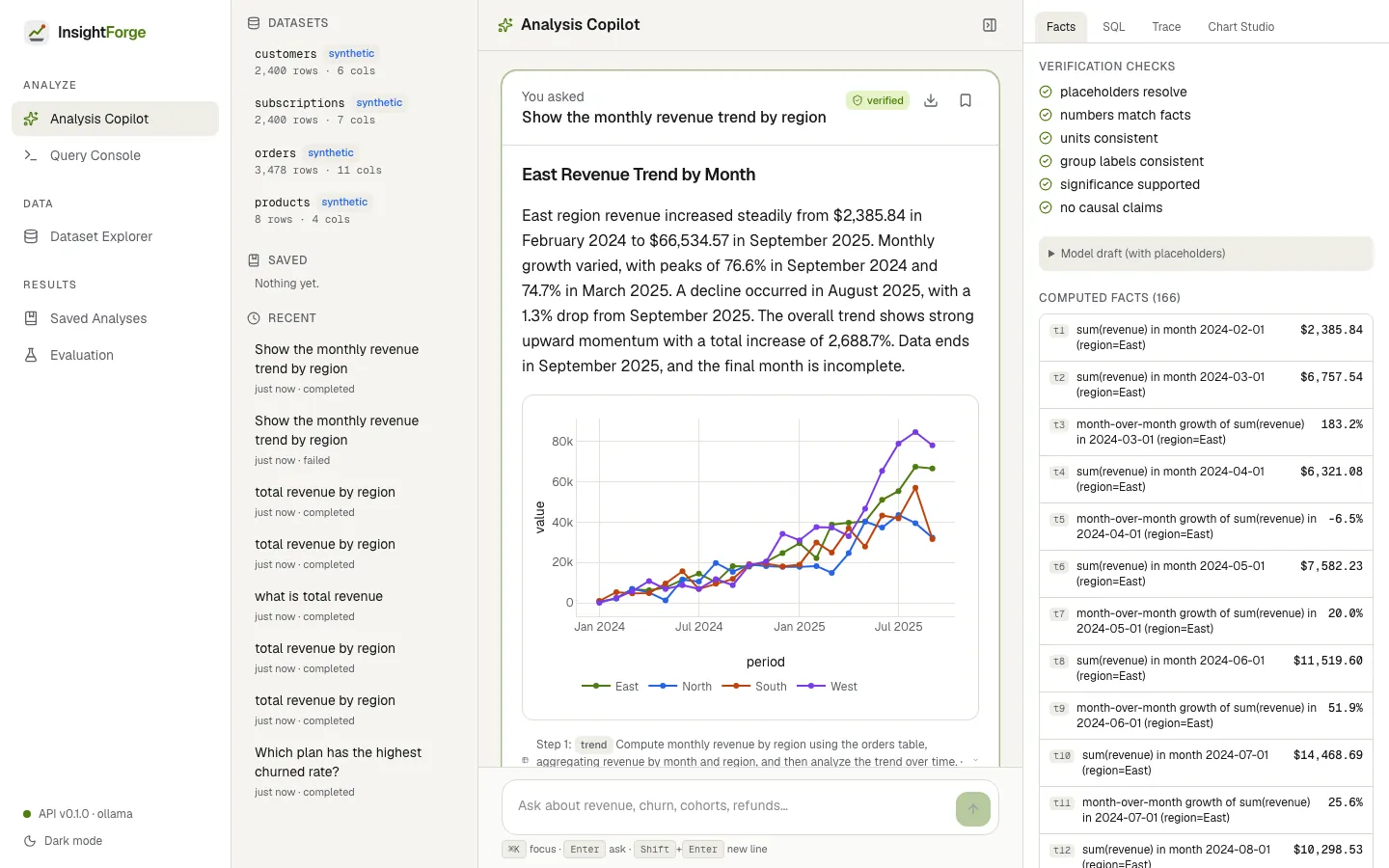
A LangGraph agent proposes typed statistical operations first and SQL second, with up to three repair attempts. Model-written SQL passes four layers of isolation before it touches data. Explanations are written with fact placeholders that a verifier fills from computed results, and charts are built server-side with Plotly.
Implemented
- Four-layer SQL isolation: SQLGlot AST policy → isolated Python worker → sandbox-exec / bubblewrap → locked DuckDB
- 12 typed statistical operations
- Fact-placeholder explanations checked by a number verifier
- Ingestion of CSV, TSV, XLSX, Parquet and SQLite into versioned Parquet with profiling
- Chart Studio, Monaco query console with an audit log, saved analyses and export
Planned, not yet built
- Warm sandbox pool
- PostgreSQL connector
- PDF export
- Larger-model evaluation
- Cross-filtering
03 System architecture
04 Core technologies
Analysis
- DuckDB
- SQLGlot
- pandas
- NumPy
- SciPy
- statsmodels
- scikit-learn
Agent
- LangGraph
- Ollama (qwen3:4b-instruct)
Application
- FastAPI
- Pydantic 2
- SQLAlchemy 2
- Next.js 16
- Plotly
- Monaco
05 Engineering challenges
Streaming through Next.js
Next.js gzip buffered the SSE stream, so progress arrived all at once. A no-transform middleware fixed it.
Isolation that holds
A query filter alone isn't a sandbox. Process-per-query isolation adds roughly 100-300 ms per statement, a deliberate trade for safety.
Numbers you can trust
Explanations reference facts by placeholder, so the model cannot invent a figure that wasn't computed.
06 Technical decisions
- 01Typed operations first, SQL second
- 02Process-level sandbox rather than query filtering
- 03Parquet as the canonical store
- 04Server-built charts
07 Verified test results
- pytest
- 170 passed, 1 skipped
- Playwright E2E
- 6/6
- Vitest
- 12/12
Latest GitHub Actions run on main: passing. Counts as reported in the repository's README and testing docs.
08 Screenshots
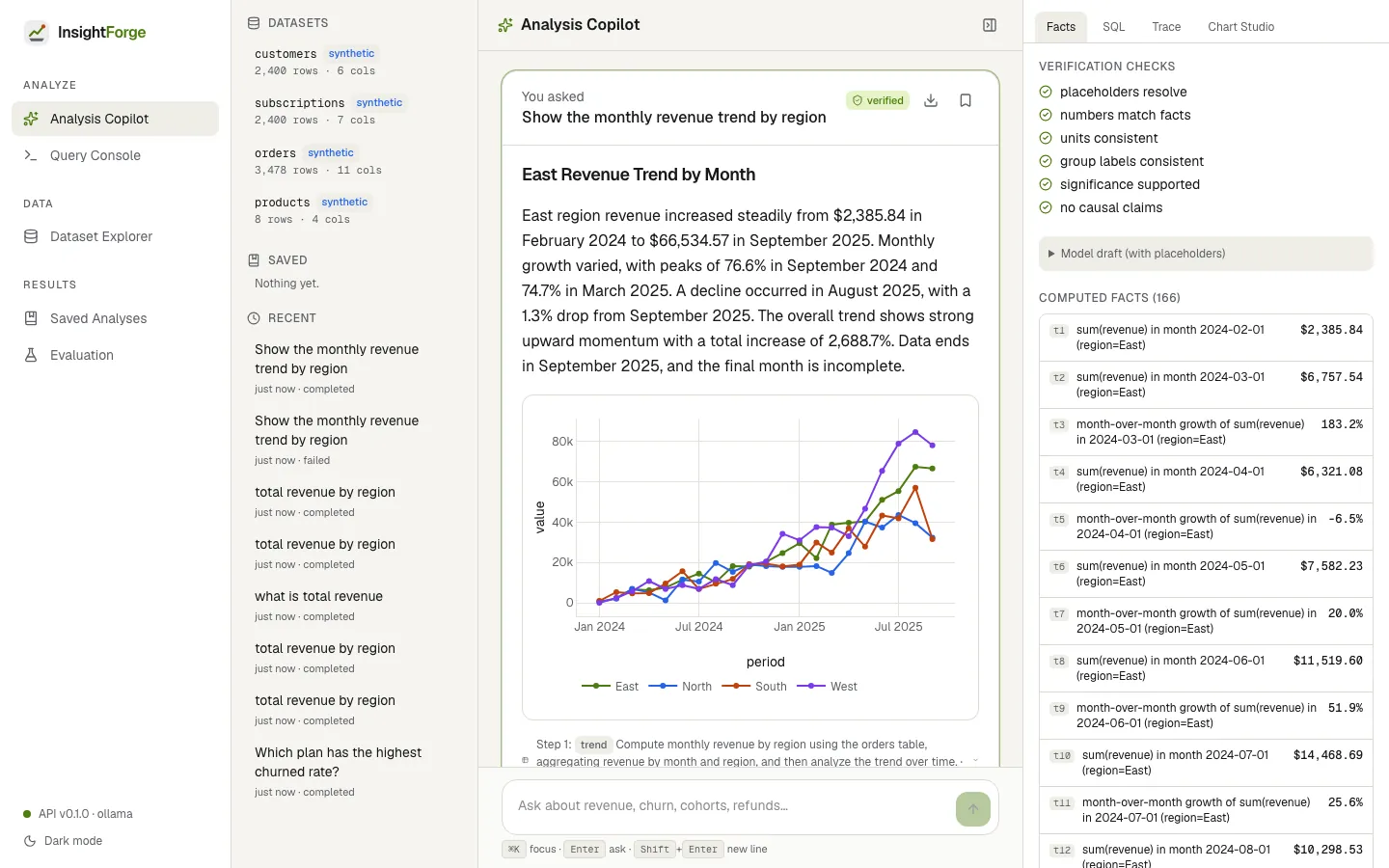
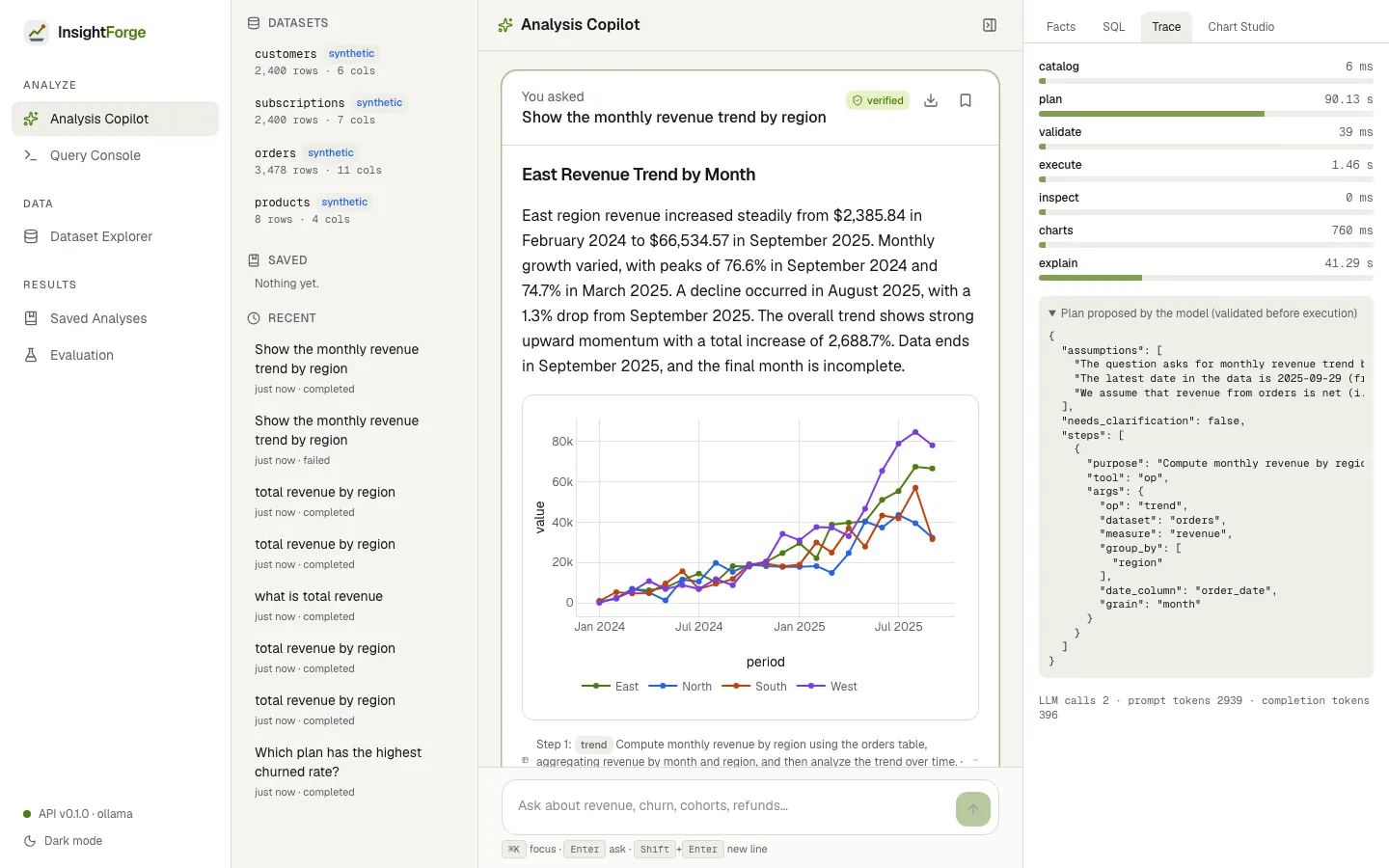
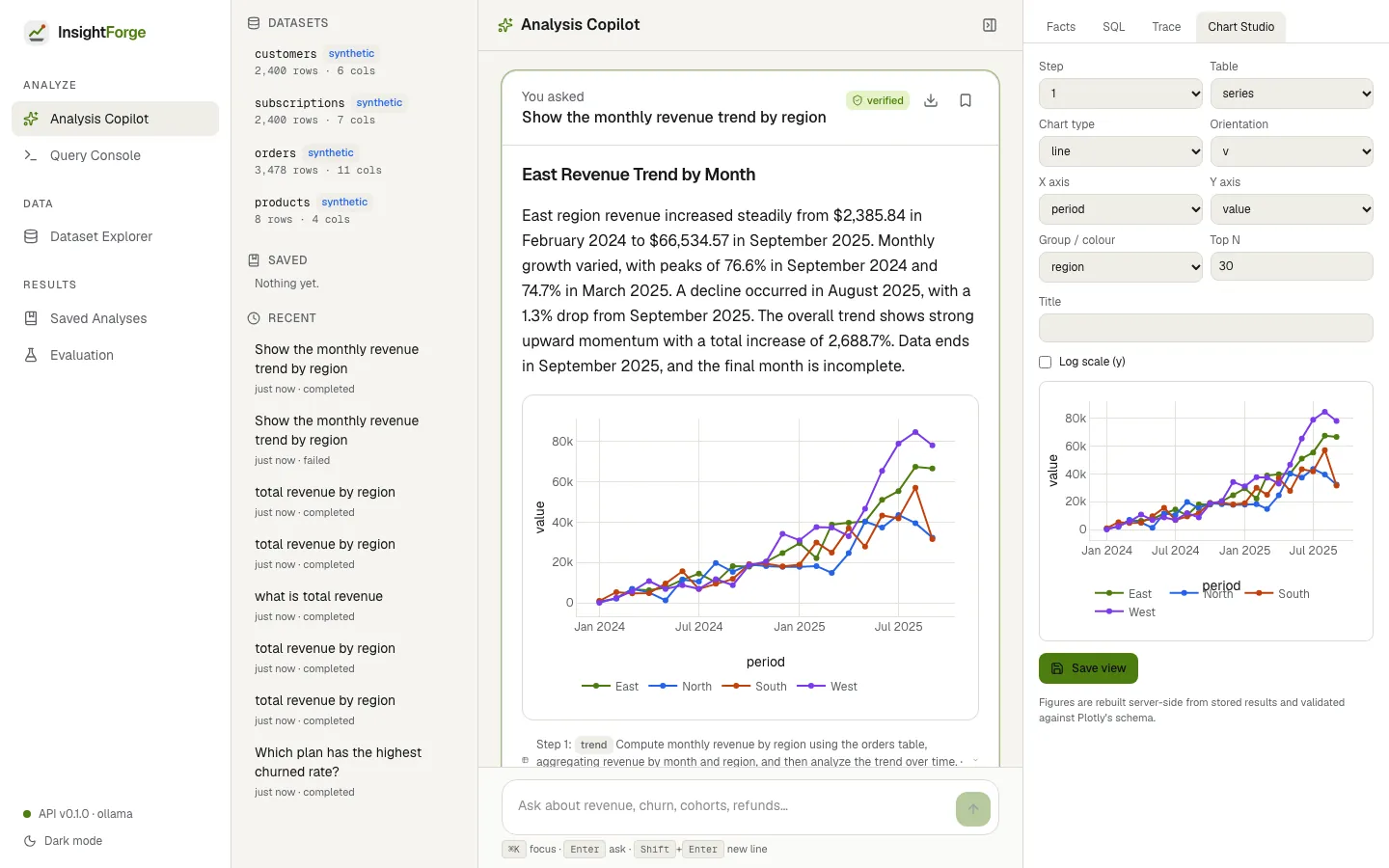
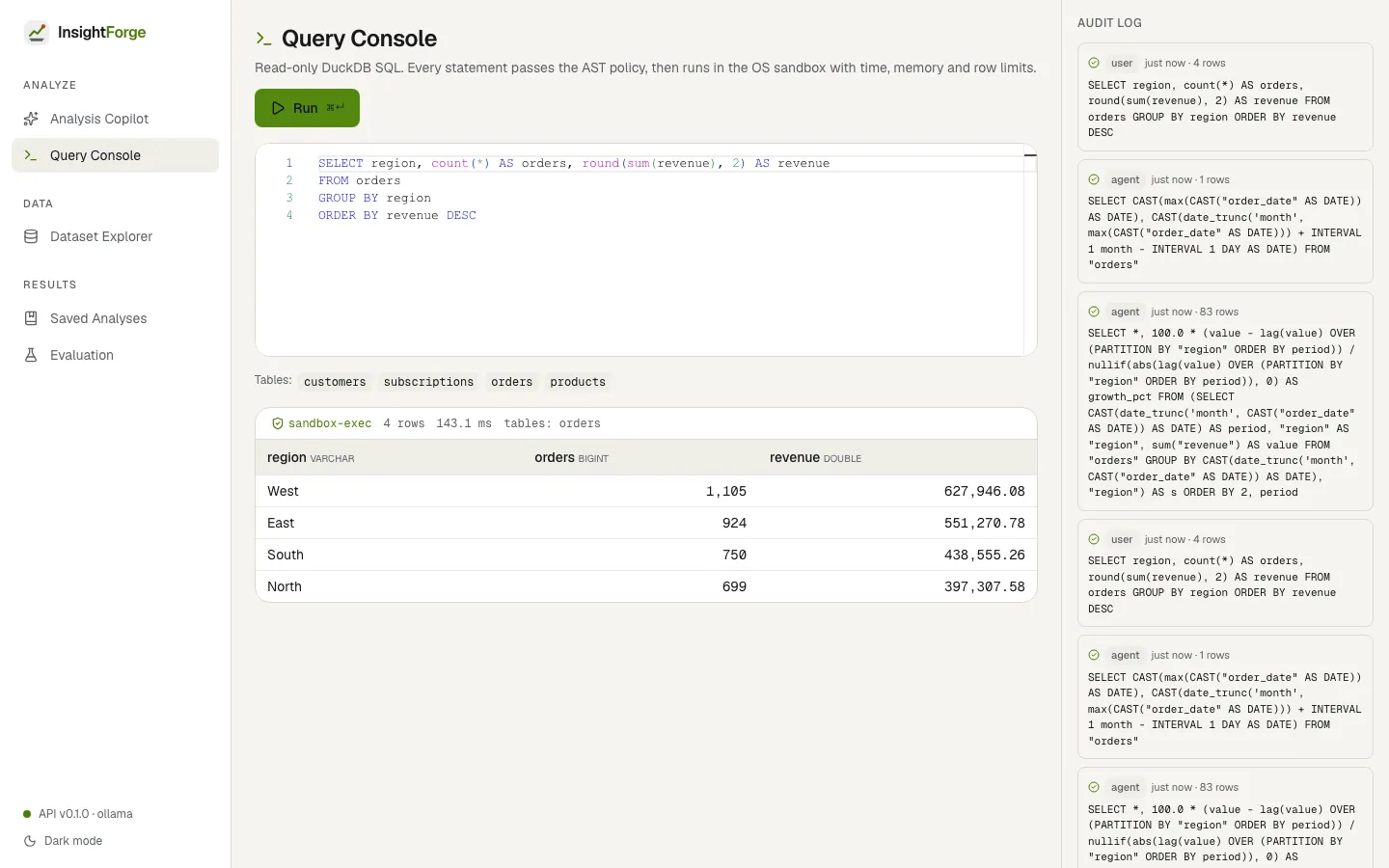
Screenshots captured from the running application and published in the repository's docs.
09 Links
No public deployment. Runs locally with Ollama. No authentication; not publicly deployed.